
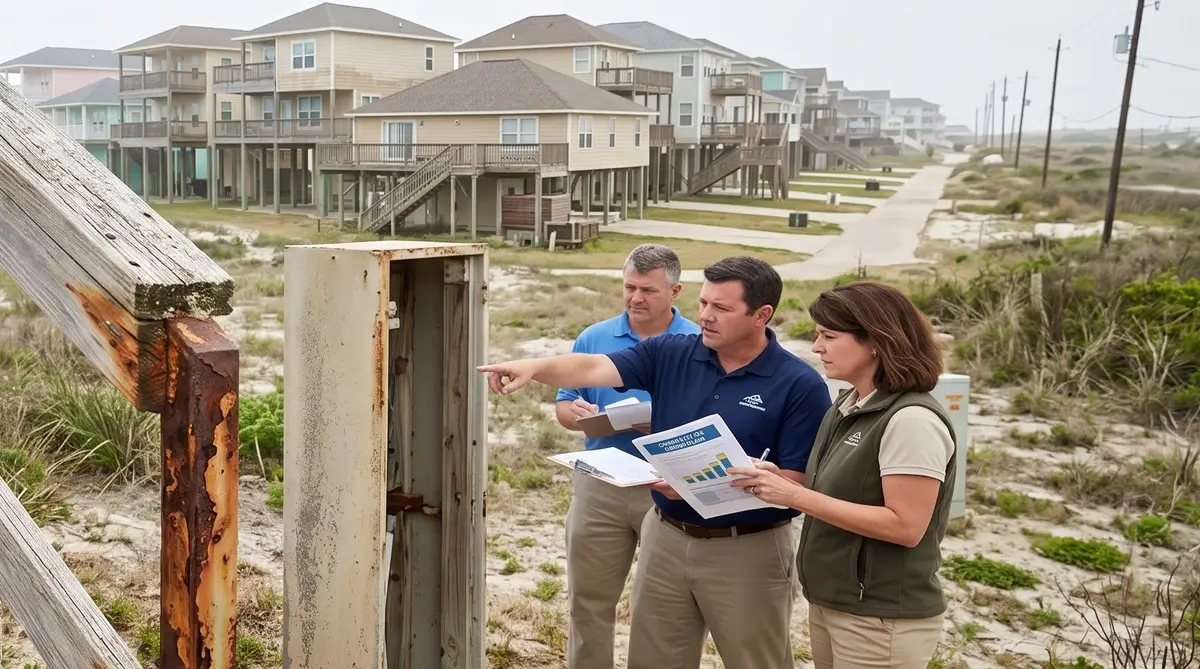
A seawall section protecting a Galveston Bay community can hold firm against routine tides for years, then show sudden deterioration once saltwater corrosion finally reaches the rebar underneath. Coastal infrastructure carries its own set of risks that inland communities rarely deal with, and boards already stretched across hurricane prep, guest concerns, and compliance work often miss these signs until repair costs have already climbed. Our article on decision fatigue building for boards captures how unrelated responsibilities crowd out the attention a slow-developing problem actually needs.
This piece looks at what’s pushing special assessment costs higher across Galveston Bay associations and what boards can do before a vote becomes the only path left.
Key Takeaways
- Reserve studies written years back rarely reflect how quickly saltwater exposure actually degrades Galveston’s shared infrastructure.
- Coastal contractor demand has made repair timelines and pricing far less predictable than in inland markets.
- A known structural concern left unaddressed across multiple seasons tends to return as a far costlier emergency.
- Owners respond better to assessments when boards share financial detail consistently, not only after damage appears.
- A board’s past approach to enforcement often shapes how residents react to a new financial request.
Why Reserve Studies Undercount Coastal Infrastructure Wear
A reserve study reflects the cost assumptions in place the year someone wrote it, and those assumptions age out quickly once saltwater exposure, storm frequency, and contractor availability shift around it. A seawall or dock repair estimated a few years back at a modest figure can run considerably higher today, leaving a board that trusted the older number unprepared once real bids come in.
A handful of factors widen this gap specifically around Galveston Bay:
- Licensed marine and structural contractors stay booked out across the coastal corridor, which extends timelines and drives up rates.
- Material costs for corrosion-resistant concrete, rebar, and marine-grade hardware climb every budget cycle, regardless of whether a project is underway.
- Insurance premiums on shared coastal structures renew higher most years, shaped by regional storm claims history.
- Dues approved several years ago stay flat while actual repair costs continue climbing beneath them.
Owners frequently ask why dues keep rising without a visible project in progress, and the honest answer usually traces back to this widening gap between the study and current market reality.
What One Galveston Bay Community Learned From a Delayed Repair
A mid-size Galveston Bay association offers a clear picture of what happens once a flagged coastal issue sits unaddressed for too long.
Two Seasons of Overlooked Warnings
The community’s reserve study flagged corrosion damage on a shared seawall section two years running. The board held off both times, concerned that owners already adjusting to rising property taxes wouldn’t welcome another increase layered on top. The board treasurer at the time later admitted she didn’t feel ready to reopen that conversation so soon after the previous budget vote had turned contentious.
The Repair That Followed
A tropical storm pushed waves past the weakened section, undermining the walkway above it and forcing an immediate safety closure. The emergency repair cost considerably more than a planned reinforcement would have run a year earlier, and the board had no remaining option besides a special assessment due within thirty days.
The median special assessment reached $1,100 per door in 2025, and coastal communities facing seawall or marine infrastructure repairs often land above that figure once emergency contractor pricing gets factored in.
Reporting Habits That Make an Assessment Easier to Accept
Boards build owner trust through consistent, itemized reporting rather than a single explanation delivered after a problem has already escalated. Our discussion of one report producing multiple paths covers a related point worth repeating here. Reliable numbers rarely settle disagreement on their own, since timing and clarity carry just as much weight as accuracy.
A few warning signs tend to surface before a funding gap becomes a surprise bill:
- Monthly financial statements arrive late or get skipped for a cycle or two.
- Reserve balances get mentioned verbally at meetings but never show up in writing afterward.
- Vendor invoices appear that weren’t part of any earlier budget conversation.
- Owners keep asking the same financial questions because nobody explained the numbers clearly the first time.
Insurance pressure shows up elsewhere in similar ways. Florida homeowners now pay an average of $2,691 a year for property coverage, a figure that’s climbed nearly 50 percent since 2020. Coastal regions carry their own cost pressures, but reserve accounts absorb that strain in comparable ways no matter where a community sits.
How Enforcement History Shapes a Board’s Next Financial Ask
Special assessments tend to meet the strongest resistance in communities where owners already feel shut out of decisions. Our look at expectations turning into tension touches on a dynamic that resurfaces here as well.
That friction tends to follow a familiar shape. Residents question the math even when the figures check out, meeting attendance spikes, and conversations grow tense quickly. Old disputes over exterior paint or dock permits from months earlier resurface during the vote, almost as if they’d been waiting for the opening. An owner who already feels unheard rarely extends patience to a large bill, and he’ll typically say so at the next meeting in front of everyone.
Steps Galveston Bay Boards Can Take Before a Vote
How a board prepares before a vote usually matters more than the final dollar figure attached to it. Our guide on disagreements unrelated to maintenance covers the groundwork that makes this step easier to manage.
A short list of moves can reduce both the size of an assessment and the resistance that follows:
- Pull the current reserve study and compare it line by line against actual account balances instead of relying on memory.
- Request updated contractor bids rather than leaning on pricing carried over from a few years back.
- Review delinquency rates closely, since unpaid dues often widen a shortfall further than the board expects.
- Share the full reasoning with owners well before the vote takes place, not after the notice gets mailed.
- Schedule routine marine structure inspections so small issues with seawalls, docks, and shared coastal infrastructure get caught while they’re still inexpensive to fix.
Boards can also lean on resources built specifically for association board leadership to weigh their options before a vote locks anything into place.
FAQs about HOA Special Assessments in Galveston, TX
How often should a coastal HOA inspect seawalls and shared docks for corrosion?
Most marine engineers recommend a full inspection every two to three years, with additional spot checks after any major storm that could accelerate saltwater damage to exposed structures.
Does flood or windstorm insurance typically cover seawall repair costs?
Coverage varies significantly by policy, and many standard policies exclude gradual corrosion damage, so boards should review their specific coastal infrastructure provisions before assuming a repair qualifies.
Can a Galveston Bay HOA require homeowners to fund dock repairs separately from seawall costs?
Some governing documents separate shared marine infrastructure costs from general common area expenses, so boards should confirm how their specific bylaws allocate these particular repair responsibilities.
What role does a marine engineer play before a major seawall repair project begins?
An engineer assesses the extent of corrosion damage and recommends repair methods suited to saltwater exposure, which helps boards avoid repeating a repair that wasn’t built for coastal conditions.
Should associations near open water carry higher reserve contributions than inland communities?
Many coastal associations do allocate more toward reserves given the accelerated wear saltwater and storm exposure cause, which helps offset the higher repair costs these communities tend to face.
Matching Paper Projections to What Saltwater Actually Does
Corrosion damage rarely jumps from minor to severe overnight; it builds quietly over seasons until a board finally sees the full extent during an emergency repair quote. PMI Galveston Bay helps local associations stay ahead of that timeline, checking documented reserve projections against what docks, seawalls, and coastal structures actually show during routine inspection.
Boards working from current data get real options instead of a single costly choice once a storm forces the issue. Talk to our accounting team about reviewing your reserve fund before saltwater exposure turns a manageable repair into an emergency assessment.
